
Wearing Your Heart on Your Sleeve
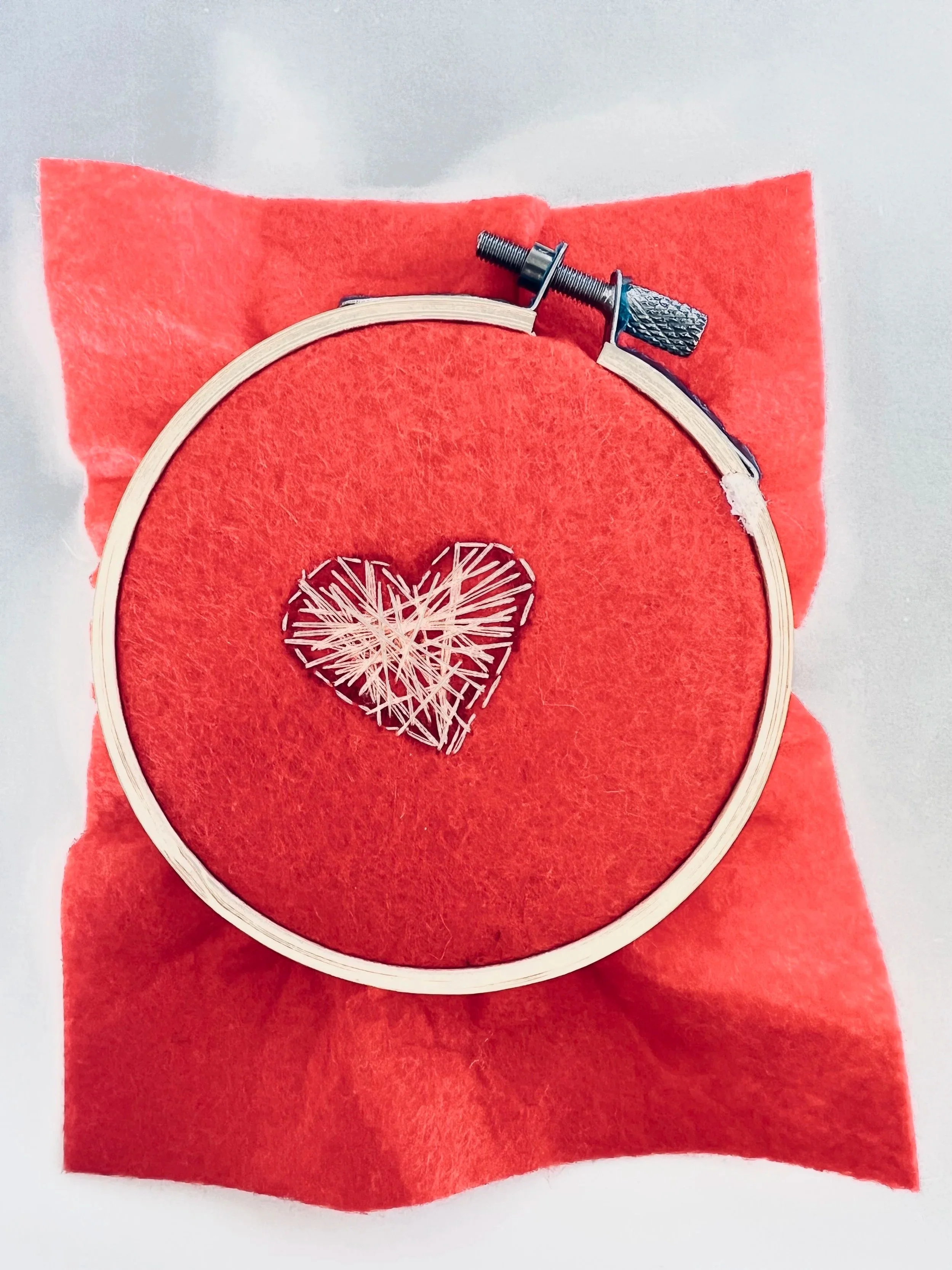
A Pink Embroidered Heart on a red fabric background is held within a wooden embroidery hoop.
Artwork created by Annie Novotny
The phrase wearing your heart on your sleeve dates back to the 16th century, first recorded in Shakespeare’s Othello. In the play, Iago warns that showing one’s true feelings is dangerous—like leaving your heart exposed for birds to peck at. Vulnerability, he suggests, is a liability.
And yet, the roots of the phrase tell a softer story.
In medieval courtly traditions, knights would fasten a token from someone they loved—a ribbon, a scarf, a handkerchief—to their sleeve. It was a visible sign of devotion. A quiet declaration: I care for someone. I am connected. I am human.
Somewhere along the way, that gesture shifted.
What was once chivalry became risk.
What was once devotion became weakness.
When did feeling become something to hide?
So many of us have learned to tuck our emotions away—to remain composed, agreeable, unshaken. Tears get swallowed. Tenderness gets masked. Sensitivity gets labeled “too much.” We’re taught that strength looks like stoicism, that safety lives in numbness.
But from where I sit—as a therapist, and as a human being—numbness isn’t strength. It’s protection.
Our nervous systems freeze when something feels unsafe. We shut down to survive. And culturally, we’ve mistaken that freeze for maturity or resilience.
But feeling—truly feeling—takes courage.
To wear your heart on your sleeve today is an act of quiet rebellion. It means allowing joy to be visible. Letting grief move through you. Speaking love out loud. Caring deeply, even when it might not be returned.
It means refusing the story that softness is weakness.
Sensitivity is not fragility.
It’s attunement.
It’s empathy.
It’s aliveness.
When we allow ourselves to feel and express honestly, we come back into relationship—with ourselves, with others, with the world around us. Emotion stops being something we “manage” and becomes something we move with.
Maybe wearing your heart on your sleeve isn’t exposure.
Maybe it’s integrity.
Maybe it’s a modern form of chivalry—
a visible reminder that we are here, we care, and we’re brave enough to let that be seen.
Annie Novotny is the founder and lead clinician at Roots and Rays Creative Counseling. She is deeply commitment to supporting sexual assault survivors and individuals navigating the aftermath of trauma. Annie views art therapy as a powerful medium for self-expression and healing. She believes wholeheartedly in the profound power of creative expression, recognizing its vital role in fostering health and well-being.