
Intention vs. Resolution
Choosing Presence as a Way of Living
When we think about personal growth, we may set intentions or resolutions as ways to improve ourselves, especially during big transitions in life (such as the turning of a year or a milestone birthday). But underneath those ideas is a bigger question: are we trying to fix ourselves, or are we just learning how to live better? From a more holistic and creative perspective, life doesn’t start once we finally “fix” everything. We’re always living and participating in life, whether we notice it or not, and how meaningful that feels depends a lot on how present we are.
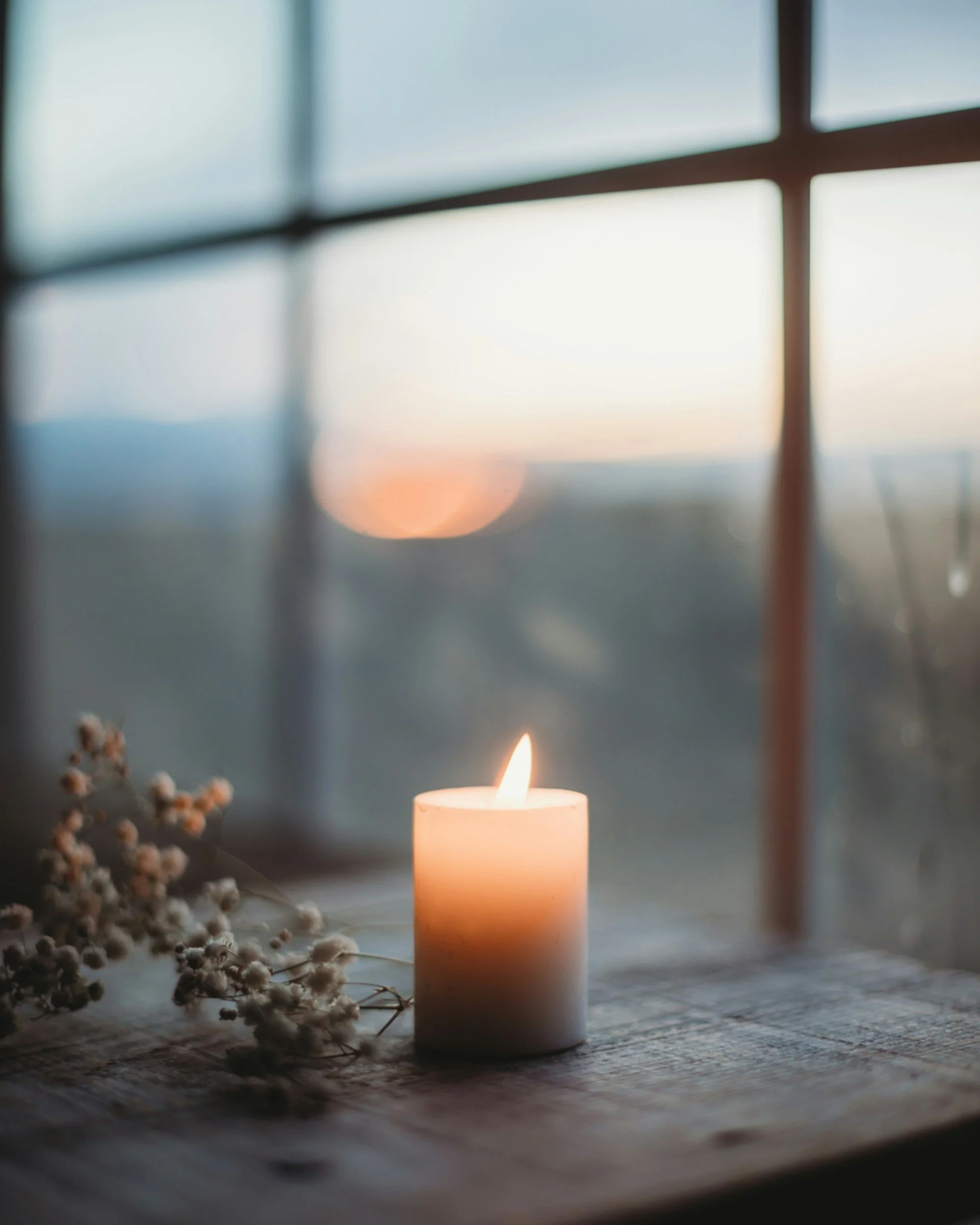
A cream-colored lit candle sits on a rustic, textured, wooden table next to a sprig of baby’s breath flowers. Behind the candle a multi-paned window frames a distant sunset giving off a warm and cozy atmosphere.
A resolution is usually about changing something in the future. It’s often based on the idea that something about who we are right now isn’t good enough and needs to be improved. Because resolutions focus so much on what’s coming next, they can pull us away from what’s happening in the moment. We might get stuck thinking about past mistakes or worrying about whether we’ll actually succeed.
While resolutions can be helpful and motivating, they can also make it feel like we’ll only be “whole” or happy once we reach a certain goal.
Intentions work a little differently. Instead of focusing on fixing flaws, intentions are about how we want to show up right now. They’re grounded in the present moment and ask questions like, “How do I want to be today?” rather than “What do I need to change about myself?” Choosing intentions like being kind, curious, or present doesn’t mean we stop growing. It just means that growth happens through being aware and engaged with life as it’s happening, instead of constantly criticizing ourselves.
One issue with living by resolutions is that it can make us feel like we’re never finished or never enough. When we’re constantly focused on what needs to change, it’s easy to miss the value of what’s already happening in our lives. This mindset can make it harder to feel joy or connection, because we’re waiting to become a “better” version of ourselves instead of appreciating who we are now.
Living with intention shifts this mindset. It emphasizes being present and treating each moment as something worth paying attention to. We don’t stop living while we wait to improve ourselves—we’re shaping our lives every day through our choices and awareness. Being present helps us meet life as it is, instead of waiting for everything to feel perfect before we allow ourselves to be fulfilled.
A healthy life isn’t about being flawless or checking off every resolution on a list. It’s about staying connected to ourselves, our emotions, our relationships, and our surroundings as they are. When intentions guide us, resolutions can still exist, but they become more flexible and supportive instead of stressful or demanding. Simple habits like resting, moving our bodies, eating well, or reflecting become acts of care rather than attempts to control ourselves.
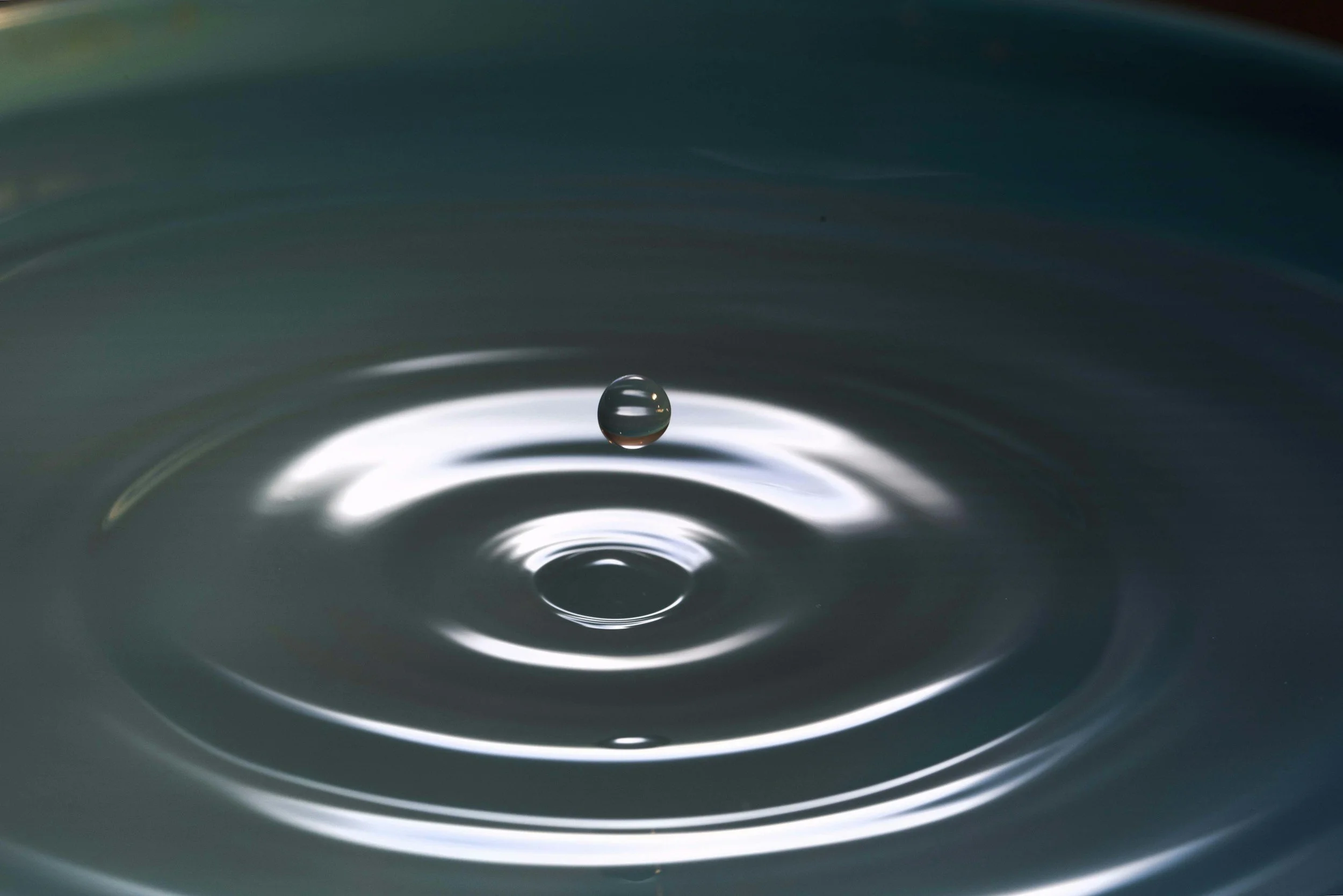
A drop of water creates concentric ripples in a larger pool of water.
Being present doesn’t mean we stop caring about the future or ignore our responsibilities. It just means we understand that the future is shaped by how we show up today. When we’re less focused on feeling inadequate and more focused on what we’re experiencing right now, we become more resilient, creative, and compassionate. Presence allows us to respond thoughtfully instead of reacting automatically.
In the end, choosing intention over strict resolutions is a way of reminding ourselves that we’re already worthy of fully living our lives. We don’t need to fix ourselves before we can show up. Life is already happening, and the real choice is whether we’re paying attention. By noticing, feeling, and engaging with the present moment, we learn that wholeness isn’t something we reach later—it’s something we experience right now.
Ethan Hurst is the counseling and art therapy intern at Roots and Rays this season. He views therapy as an opportunity to rediscover one’s authentic core and to cultivate a greater sense of inner peace and alignment. Guided by reverence for community, nature, and the healing potential of shared creative space, he meets others with empathy, curiosity, and presence, walking alongside them as they reflect, grow, and imagine new possibilities forward.