Soft Fascination: Ecotherapy at Roots & Rays
At Roots & Rays Creative Counseling, we hold a simple truth at the heart of our work:
healing deepens when we remember our place within the natural world.
Ecotherapy is rooted in biophilia, the innate human pull toward nature first described by biologist E.O. Wilson. His research suggests that we carry a genetic affinity for life and living systems, a quiet remembering in our bones. And while humans have turned to the earth for guidance since the beginning of time, the formal term ecotherapy emerged in the 1990s through Howard Clinebell’s work within the larger ecopsychology movement.
In the decades since, studies continue to affirm what our ancestors always knew: time spent in nature regulates the nervous system and supports healing. Ecotherapy has been shown to reduce physiological arousal and ease symptoms of PTSD, chronic pain, anxiety, depression, ADHD, burnout, and emotional exhaustion.
But beyond symptom reduction, ecotherapy invites us back into relationship—with ourselves, with each other, and with the ecosystems that hold us.
“Eco,” meaning home, reminds us that healing is not an isolated act. It is connected, relational, and woven into the broader webs of land, lineage, and community.
Ecotherapy is also an act of resistance: a counterpoint to the Western medical model that isolates suffering within individual pathology. Instead, it asks us to consider reciprocity- how we are supported by the land, and how we might support it in return. It holds threads of social justice, environmental stewardship, and collective responsibility.
Soft Fascination & the Art of Noticing
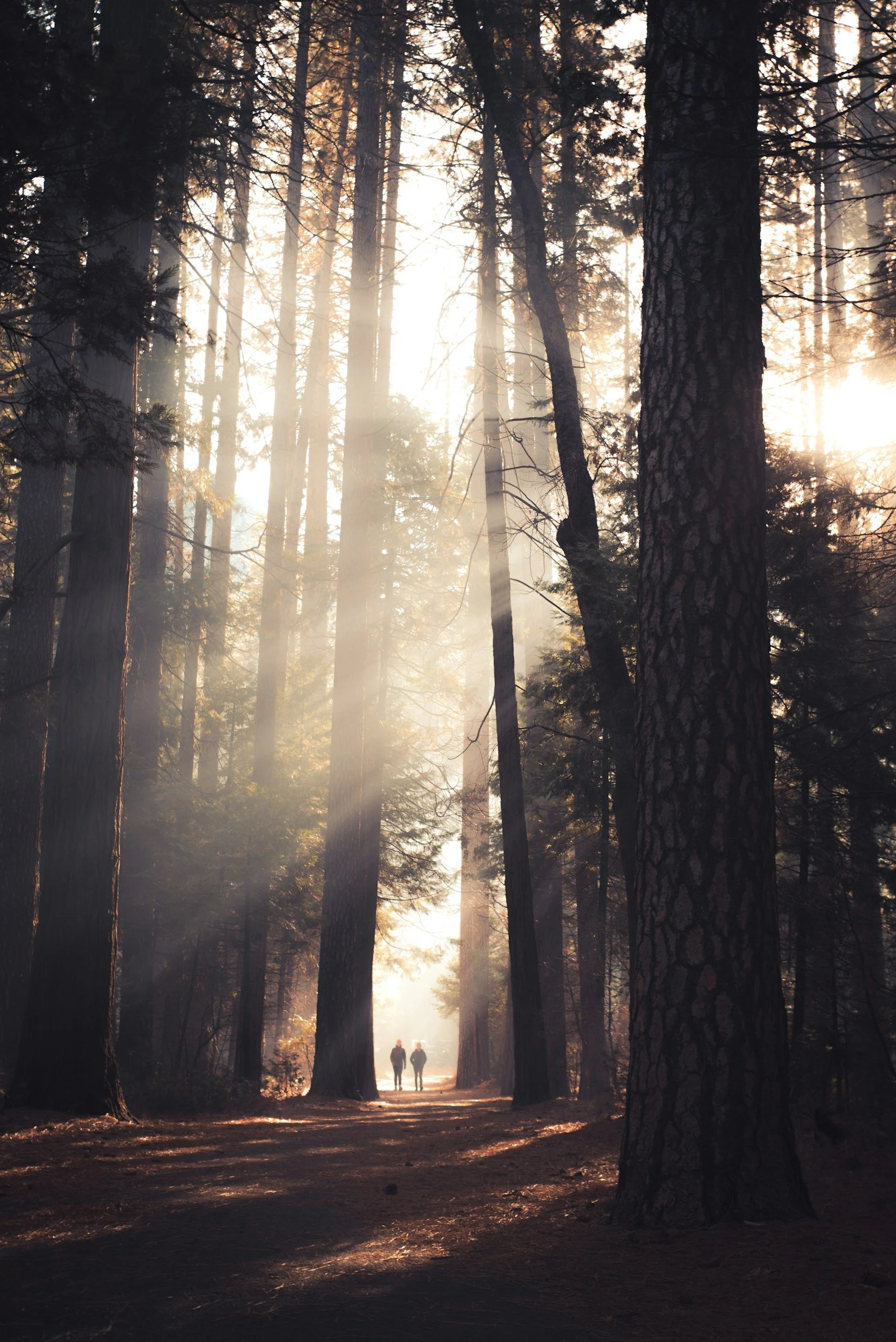
One of the core practices of ecotherapy is soft fascination- a term used by researchers to describe gentle, effortless attention. Unlike the kind of focus required by screens, tasks, or crisis, soft fascination draws us in without overwhelming the mind.
Think of sunlight shifting through leaves.
The sway of tall grasses.
The sound of water moving over stone.
This kind of attention calms the nervous system, making space for emotional processing, regulation, and rest. Nature teaches us the same lessons we encounter in therapy: seasons of growth and seasons of stillness; cycles of decay and renewal; the ongoing work of tending and cultivating.
Practices like forest bathing (shinrin-yoku) from Japanese culture deepen this embodied awareness. Trees release organic compounds- terpenes- that reduce cortisol and support the body’s stress-recovery systems. Through scent, sound, temperature, color, and texture, our senses come alive again. We drop into presence. We remember we have a body.
Ecotherapy in a Time of Ecological Grief
Many people today carry climate anxiety, climate grief, and a profound ache for what is being lost. These emotions are real and valid. Ecotherapy offers a compassionate space to feel these truths—without collapsing under them. In connecting with the land, we reconnect with our capacity for groundedness, resilience, and collective care.
Our Ecotherapy Sanctuary at Roots & Rays
We are incredibly fortunate to practice in a natural environment that supports “soft fascination” in every season. Our therapy space is surrounded by mature oaks and pines, native pollinator and edible plants, and abundant wildlife—birds, (many many) squirrels, and the occasional curious raccoon.
Across the property, you’ll find small pockets designed for reflection and connection—places where clients can gather around a fire, sit quietly beneath the trees, or engage in ritual and creative work outdoors.
Even indoors, the surrounding wall of windows brings nature into every session. Light shifts across the room. Leaves change color. Weather rolls in and out. These subtle movements remind us that change is constant, and that we too are always in motion.
At Roots & Rays, our work is guided by an ethical relationship with the land we inhabit. We tend it as it tends us. Through co-regulation with nature, clients experience compassion, clarity, and a deep, always-available sense of restoration.
Further Reading & Inspiration

If you’re curious to explore more about ecotherapy and our relationship to the natural world, we recommend:
When we return to nature, we return to ourselves. May this work continue to offer sanctuary, connection, and soft fascination to all who seek it.
Written by Colleen O’Sullivan. O’Sullivan is a licensed social worker, trauma-informed psychotherapist, and community-rooted healer. She writes from the lineage of liberation psychology—where story becomes resistance, embodiment becomes reclamation, and healing is woven through relationship and collective care.